
 Meher Baba's Life & Travels
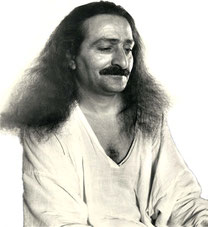




Born : 1st March 1893 - New York, USA
Died : 9th May 1968 - New York, USA
Author & Film industry
|
1932
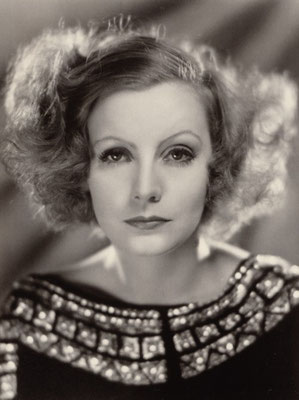
ON ONE OCCASION, Norina telephoned her old friend Mercedes D'Acosta, a movie screenwriter, to tell her there was someone in town she should meet. But the woman had been severely depressed of late and did not wish to meet anyone, but Norina urged her that she would not regret meeting this person. Norina would not say who he was since she wanted it to be a surprise. Finally, she persuaded her friend to come. It was December 31st; Norina was waiting at the door when Mercedes arrived. Upon seeing Baba, the woman felt an overwhelming warmth radiating from him. She rushed into his embrace and asked, "Who are you?" Baba gestured, "I am you." Then suddenly he spelled out on his board, "Go and bring me your revolver." Mercedes was amazed, for she had told no one about the gun in her car. She went to the car and returned with the revolver, handing it to Baba. He took the bullets out one by one and handed the gun back to her. Baba then consoled her, "Suicide is not the solution. It only entails rebirth with the same problems all over again. The only solution is God-Realization – to see God in everything. Everything is easy then. Promise me that you will put this revolver away and never again think of suicide." Feeling his compassion, Mercedes promised. She then told Baba about her friend Greta Garbo whom she loved dearly. Baba commented, "You both were husband and wife in a past life in Italy. That is why there is such love between you." Mercedes said, "This explains why Greta said when she first met me, 'Oh, I have been looking for you.' " Baba added, "She was a yogi in a previous life and died suddenly. She has latent yogic powers in her in this life, too, but no spiritual elevation. She both suffers and enjoys simultaneously. She will be in the pangs of such agony one day that she may commit suicide. She needs my contact. If she sees me, all this will change." Mercedes was happy meeting Baba and presented him with a phonograph. Baba sent her a handkerchief as a New Year's gift and directed her never to give it away. She said that she would always sleep with it under her pillow. On this occasion, Mercedes invited Baba to tea at her house. Baba was usually declining most invitations but, for her, he consented. The following day the group arrived at Mercedes' house by car. As soon as he entered the beautiful home, Baba
|
||||||

|





12th November, 1935
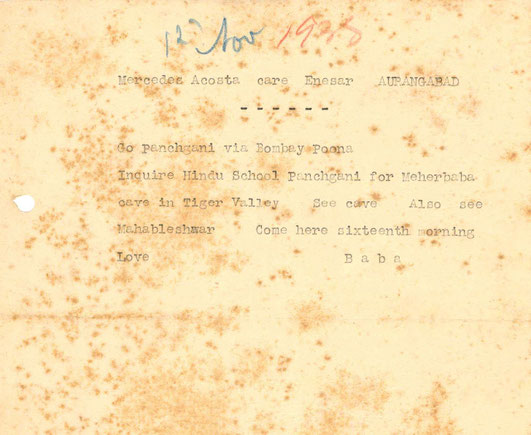
1936
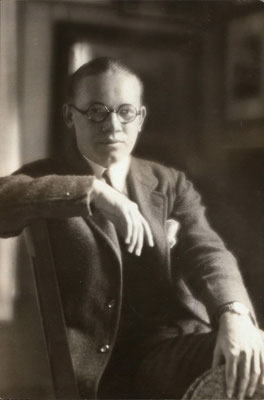
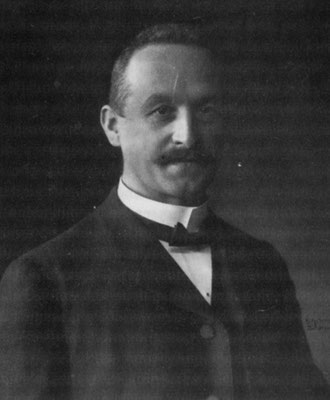
American named Alexander Markey, who met Baba for the first time during this brief visit to London. Markey was an accomplished writer and director of stage and film.
Many screenwriters had been contacted to work on the scripts for Baba's film projects, and when Markey's name was cabled to Baba by Norina and Elizabeth, who had contacted him in New York, Baba had cabled back: "Markey is the man!" Therefore, the search for other writers ceased and Baba accepted Markey's treatment of the material. He was working on the screen adaptation of Karl Vollmoeller's story This Man David, after Mercedes D'Acosta had written a synopsis.
Lord Meher Volume 6, Page 2043


1937
That night, Baba went to Monte Carlo with Norina and Mercedes D'Acosta to see the casinos. Dressed incognito, he looked stunning; wearing a cape of Norina's and a French beret of Mercedes', Baba blended in well in that risqué atmosphere.
Lord Meher Volume 6, Page 2209

On September 18th, Baba was at Capo di Monte the whole day, from eight in the morning until eight in the evening, to celebrate the occasion of Ruano Bogislav's and Adi Jr.'s birthdays. Someone, probably Mercedes, pointed out that it was also Greta Garbo's birthday.
Lord Meher Volume 6, Page 2217

|
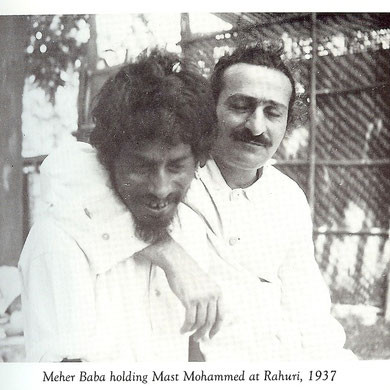
One visitor whom Baba did permit to stay in Cannes was Mercedes D'Acosta from Hollywood, who arrived on October 21st. One afternoon, Baba went for a drive with her and he decided to take Mohammed along. They drove in a convertible, and just as the chauffeur slowed down for the traffic in Nice,
|
|||||||||

1938
SINCE the first week of October 1938, Chanji had been travelling back and forth between Bombay and southern India and Meherabad on work for Baba. He had been sent to Hyderabad on October 2nd and was sent back again on November 6th.
Meanwhile, Mercedes D'Acosta and Consuella de Sides had come to India in November with the intention of meeting other spiritual Masters and yogis. They seemed to have "drifted away" from Baba, but came to see him at Meherabad on November 17th.I must make myself clear, not because I want anything from you, but because I feel for you and because you have come all the way from Europe to see India. There are three types of spiritual beings in India: the sensational, the unassuming but deep and quiet, and the Man-God or God-Man.
The sensational types just make a show of their knowledge of Vedanta and give lofty talks on higher ideals of life and spirituality. It is all on the surface, hence, an outward show. They seek to create an impression, and people who go to them are impressed by miracles, which are really nothing more than [tantric] tricks. This is undesirable, being sort of a bargaining. I do not want this kind of faith.
The other type, which is unassuming and quiet, is deeper in knowledge and experience because they are advanced souls and a few are Perfect Ones. They prefer a quiet life and do their work in silence – and, hence, are little known.
The Sadgurus and Qutubs experience Godhood and manhood both. They have attained the spiritual heights and have also come down to human level to help mankind. Their methods are peculiar, hence, not understood by ordinary people.
Chanji had returned from Hyderabad, and on November 18th, Baba ordered him to accompany Mercedes and Consuella to Kedgaon so that they could have the darshan of Sadguru Narayan Maharaj.
When they arrived at Narayan Maharaj's palace, they were informed that he had just retired for the night five
minutes before. But when Narayan was informed that three persons sent by Meher Baba had come, he returned. Narayan lovingly asked about Baba, messages were exchanged, and with his blessings,
Mercedes, Consuella and Chanji left.
Lord Meher Volume 7, Page 2335-6


Having come back from Paris, the men mandali left on October 28th for Marseilles. The next day, Mercedes D'Acosta bid farewell to return to America. For some, this farewell to Baba in Cannes would be their last intimate contact. Baba would not make another trip to the West for fifteen years, until 1952. Some would never see him again.

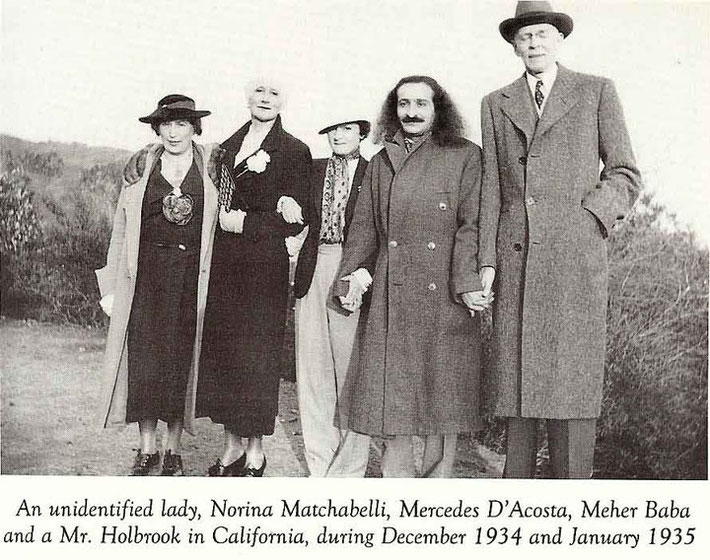
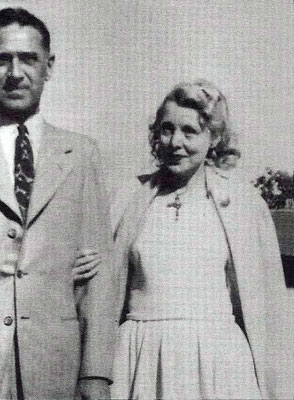
The unknown lady is actually Nadine Tolstoy
1956 - America
Mercedes D'Acosta saw Baba and complained to him of her deteriorating health and eye paralysis. Baba asked her to repeat his name seven thousand times every day, to begin after seven o'clock that evening.
Lord Meher Volume 14, Page 4957

My Meeting With Ramana Maharshi
She was a Hollywood screenwriter. He was the most revered sage in India. Here's what happened when she visited him for three days.
By Mercedes De Acosta
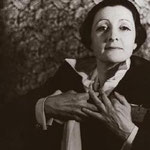
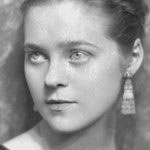
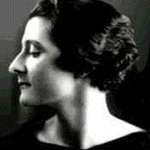
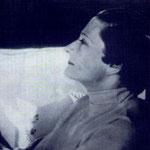
Mercedes De Acosta was a Cuban-American screenwriter of the 1920s and 30s who was famous for her love affairs with Greta Garbo, Marlene Dietrich, Isadora Duncan, and a host of other beautiful celebrities.
"I can get any woman away from any man," she liked to tell her friends.1
In 1938 she traveled to Arunachala to meet Ramana Maharshi and stayed for three days. She later wrote in her autobiography that these were the three most significant days of her life.
In 1962 she sent Sri Ramana a copy of her autobiography, from which this article is excerpted, and inscribed it as follows:
To Bhagavan Ramana Marharshi, the only completely egoless, world-detached, and pure being I have ever known.
This is her account of what happened during her stay in Arunachala in 1938.
A SEARCH IN SECRET INDIA [a book by Paul Brunton] had a profound influence on me. In it I learned for the first time about Ramana Maharshi, a great Indian saint and sage. It was as though some emanation of this saint was projected out of the book to me. For days and nights after reading about him I could not think of anything else. I became, as it were, possessed by him. I could not even talk of anything else. Nothing could distract me from the idea that I must go and meet this saint. From this time on, although I ceased to speak too much about it, the whole direction of my life turned toward India and away from Hollywood. I felt that I would surely go there, although there was nothing at this time to indicate that I would. Nevertheless, I felt I would meet the Maharshi and that this meeting would be the greatest experience of my life.
I had very little money, far too little to risk going to India, but something pushed me towards it. I went to the steamship company and booked myself one of the cheapest cabins on an Indian ship, the S. S. Victoria, sailing from Genoa to Bombay toward the beginning of October. In the meantime I flew to Dublin to see my sister.
I had booked passage to Ceylon intending from there to cross over to southern India and go directly to Tiruvannamalai, where Ramana Maharshi lived. But when the ship called at Bombay, Norina Matchabelli came on board to see me with a message from Meher Baba saying that Consuelo [a lady traveling companion who was a follower of Meher Baba] and I must get off the ship and come to see him in Ahmednagar, about two hours from Bombay. I did not want to do this as my real purpose in India was to see the Maharshi, and I was impatient to get to him.
[The author had met Meher Baba in California and for some time evinced considerable respect for him. However, her faith in him waned prior to coming to India, and once there, it all but evaporated. At Meher Baba's request-one of the few she consented to-she first made a tour of India, delaying her visit to the Maharshi.]
http://www.robertschanke.com/mercedes/
http://laurencefrommer.tripod.com/celebrity/mercedesdeacostacelebrity.html

Mercedes de Acosta
From Wikipedia, the free encyclopedia
| Poet, Playwright | |
| Born |
March 1, 1893 New York City |
| Died |
May 9, 1968 (aged 75) New York City |
| Occupation | Poet, Novelist, Playwright |
| Nationality |
USA
|
Mercedes de Acosta (March 1, 1893 – May 9, 1968) was an American poet, playwright, costume designer and socialite, best known for her numerous lesbian affairs with Hollywood personalities including Marlene Dietrich, Greta Garbo, Alla Nazimova, Tamara Karsavina, Eva Le Gallienne, Isadora Duncan, Katharine Cornell, Ona Munson, Adele Astaire and, allegedly, Tallulah Bankhead, amongst others, which she documented in her controversial autobiography Here Lies the Heart.[1]
It was a reputation not appreciated by everyone. As Alice B. Toklas, the lover of Gertrude Stein, wrote to a disapproving friend, Anita Loos,
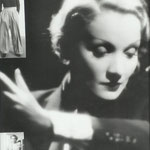
- "...you can't dispose of Mercedes lightly—she has had the two most important women in the US—Greta Garbo and Marlene Dietrich."[2]
Four of de Acosta's plays were produced, and she published a novel and three volumes of poetry.
Contents |
Background
She was born in New York City in 1893 to a Cuban father, Ricardo de Acosta, and a Spanish mother, Micaela Hernandez de Alba y de Alba, reportedly a descendant of the Spanish Dukes of Alba. She had several siblings: Aida, Ricardo Jr, Angela, Maria, and Rita. The last would become a famous beauty best known as Rita Lydig.
Mercedes de Acosta married Abram Poole (1882–1961), a painter and socialite, in 1920. They divorced in 1935.
Personal life
Although talented in her professional field, it is no doubt her personal life that has made her famous in Hollywood circles. She became involved in numerous lesbian relationships with Hollywood's elite, claimed many more, and did not attempt to hide her sexuality.
In 1916 she began an affair with actress Alla Nazimova, and shortly thereafter started an affair with young actress Tallulah Bankhead, and later dancer Isadora Duncan. Shortly after marrying Abram Poole in 1920, de Acosta became involved in a turbulent five-year relationship with actress Eva Le Gallienne. The two women vacationed and travelled together often, at times visiting the salon of famed writer and socialite Natalie Barney in Europe.[3] De Acosta wrote two plays for Eva during that time, Sandro Botticelli and Jehanne de Arc. Neither were successful, and the combined financial failures of both plays and de Acosta's possessive and jealous nature brought the affair to an end.[3][4]
Over the next decade she amassed an ensemble of female partners, all of whom were either rising stars, or aging stars. These included Rudolph Valentino's alleged fiancée, actress Pola Negri, who went on to star in films for UFA during the 1930s, writer Edith Wharton, writer and stage actress Katharine Cornell, socialite Dorothy ("Dickie") Fellowes-Gordon, and with writer Amy Lowell.
De Acosta was involved with married Russian ballerina Tamara Platonovna Karsavina throughout her life, after their first meeting in 1920. The two were as much friends as they were lovers, and Karsavina was one of the few who continued to be friendly toward de Acosta following the controversial autobiography released by the latter, exposing many of her relationships to the public.
Affair with Greta Garbo
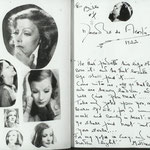
In 1931, she met and claims to have quickly become involved with Greta Garbo. The two were introduced to one another by de Acosta's lover at the time, author Salka Viertel. Her relationship with Garbo has often been described as "the love of her lifetime".
It is unknown from all information from the time if Garbo shared those feelings. However, Garbo was in control of the affair, and the two would be together for lengthy periods often taking vacations together, then apart for long spells without Garbo even acknowledging de Acosta, and everything was at the will of Garbo. In 1944, Garbo ended the on-again off-again relationship. At that time, she insisted de Acosta stop sending her poems and letters professing her love. The last known poem written by de Acosta for Garbo was written that same year. By all accounts, de Acosta remained in love with Garbo for the remainder of her lifetime.
Travels in India
In the 1930s Mercedes had acquired an interest in Eastern spirituality through one of her acquaintances, Princess Norina Matchabelli, a follower of the Indian mystic Meher Baba. For many years de Acosta was captivated by Meher Baba and spent time in his company when he visited Hollywood. In fact, Meher Baba made mention of de Acosta's affection for Greta Garbo, saying they had been married in a previous life (of Garbo, Meher Baba said she was the most spiritual of the Hollywood actresses of that era). De Acosta also went to India to meet with Meher Baba. Over the years however she lost focus on Meher Baba until the 1950s, when she met him for the last time.[5][6] According to her published memoir Here Lies the Heart, Mercedes also met Ramana Maharishi, with whom she was more impressed than she was with Meher Baba.
Later life, controversial autobiography
Her memoir, Here Lies the Heart[7], was published in 1960 because Mercedes was seriously ill with a brain tumor and in need of money.
Its revelations, though highly sanitized and supported as fact, resulted in the severing of numerous friendships of famous women who preferred their sexuality remain private, including that of the mercurial Garbo. Eva Le Gallienne in particular was furious, and completely did away with anything reminding her of de Acosta. Many denounced her as a liar, stating that she invented these stories for fame. This is unlikely, as most of the affairs have been confirmed through personal correspondence, and many of the affairs were known to Hollywood insiders, but were kept out of the headlines for the sake of the actresses' careers.[citation needed]
She found herself cut off from many of her friends and increasingly in financial straits. De Acosta died at age 75 in relative poverty and obscurity.
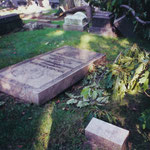
She is buried with her mother and sister, Rita Lydig[8] at Trinity Cemetery in Washington Heights, New York City.
References
- ^ Hugo Vickers, Loving Garbo: The Story of Greta Garbo, Cecil Beaton, and Mercedes de Acosta, Random House, 1994.
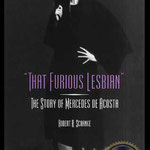
- ^ Schanke, Robert A (2004). That Furious Lesbian: The Story of Mercedes de Acosta. Southern Illinois University Press. ISBN 0-8093-2579-9.
- ^ a b Le Gallienne, Eva (1899-1991), glbtq. Accessed 5 March 2009.
- ^ Page 2 of Maude Adams Photos, Darkchilde's Sanctuary on the Web. Accessed 5 March 2009.
- ^ Awakener Magazine, Volume 18, Number 1, 1978, p. 15
- ^ Lord Meher, Bhau Kalchuri, 1986, p. 1940
- ^ de Acosta, Mercedes (1960). Here Lies the Heart. ISBN 0-405-07360-7.
- ^ "Rita de Acosta". http://www.angelfire.com/realm/bodhisattva/rita_de_acosta.html. Retrieved 2006-06-01.
Further reading
- McLellan, Diana (2001). The Girls: Sappho Goes to Hollywood. St. Martin's Griffin. ISBN 0-312-28320-2.
- Stern, Keith (2009), "de Acosta, Mercedes", Queers in History, BenBella Books, Inc.; Dallas, Texas, ISBN 978-1933771-87-8
External links
- Mercedes de Acosta at the Internet Movie Database
- Mercedes de Acosta at the Internet Broadway Database
- Mercedes de Acosta Revisted
- Mercedes de Acosta: Playwright, Lesbian Pioneer and Lover to the Stars
- Mercedes de Acosta — One Woman's Meeting With Enlightenment
- The Awakener Magazine
- Lord Meher, pp. 1940, Bhau Kalchuri, Manifestation, Inc.